Tuesday, June 29
Monday, June 28
OUT AND ABOUT
Tinariwen

It was out of this world.
Tinariwen is a band of musicians from the Taureg rebel community in the Saharan desert region of Mali. They've been playing music since the late 1970's, influenced by West African blues and Moroccan Pop Rai during their nomadic years as exiles in Algeria and by radical protest songs that sprung from rebel fighting in Mali.
Couldn't keep my eyes off of Ibrahim Ag Alhabib, an old, wild-haired sage sporting a royal blue silk robe who sang--barely moving his lips, barely changing his expression--underneath his mustache.
His hand was bullet-scarred and moved with expert grace.
Can't stop, won't stop thinking about it.
Labels:
Music,
Out and About,
Tinariwen
Thursday, June 24
Saturday, June 19
HUNTING: IN THE BROOKLYN FLEA AND IN COLONIAL TIMES
Fox Hunting
Prints by Samuel Howitt
Republished by Edward Orme, Bond St, 1812.
I'd say it was the fox hunting scene in Mary Poppins that commandeered a spot in my heart for the wild-game hunting aesthetic. Those red-clad Brits perched on their pure-breads chasing hairy scoundrels...!
So these old fox hunting place mats caught my eye at the Brooklyn Flea yesterday, and I had to take them. These dense, wooden place mats are well-suited for a robust English breakfast of black pudding, rashers, and fried bread.
The images on the mats are from Samuel Howitt's engravings from the early 19th century. Samuel Howitt, I learned, was a English gent, sportsman, and artist who provided the visual counterpart to popular hunting tales from colonial India and Africa. He illustrated books like Historic, Military, and Naval Anecdotes of Personal Valour, Bravery, and Particular Incidents and Foreign Field Sports, Fisheries, and Sporting Anecdotes. I love these titles. (My autobiography: Charlotte Hundley. The Urban and Suburban Anecdotes of Personal Valor, Bravery, and Particular Saucy Incidents)
Anyway, I discovered that Howitt's watercolors and engravings, such as Battle of a Bulldog and a Monkey and Oriental Field Sports, are exotic, perverse, violent, and most definitely sources for the talented New York artist Mr. Walton Ford.
Labels:
design,
Samuel Howitt,
Walton Ford
Thursday, June 17
DISCUSSION NO. 3
What We Talk About When We Talk About
Iris Apfel

Known for her unexpected pairings, exotic accessories and inexhaustible creative spirit, Iris Apfel is now in her 88th year and still going strong.
In 2005, Apfel was asked (by the Met, nonetheless) to curate an exhibit that would include more than 50 years’ worth of her well-curated wardrobe, ranging from couture pieces purchased in Paris to $5 costume jewelry from junk stores. She called is Rara Avis or Rare Bird. Very fitting.
Apfel is quick to point out that her intention was never to gather a collection of clothes for a museum. For her, purchasing clothing was always about the thrill of the hunt. “I like to creep around and dig, it’s no fun to just sit in a shop and have people present you with things. It was the process. It’s not that I’m so mad about clothes. It’s about finding things and putting them together. That’s the fun."
.jpg)


Apfel's thoughts on being unconventional:
"If you can't be pretty, you have to learn to make yourself attractive. I found that all the pretty girls I went to high school with came to middle age as frumps, because they just got by with their pretty faces, so they never developed anything. They never learned how to be interesting. But if you are bereft of certain things, you have to make up for them in certain ways. Don't you think?"
Sunday, June 13
Friday, June 11
TIPI
Native living.
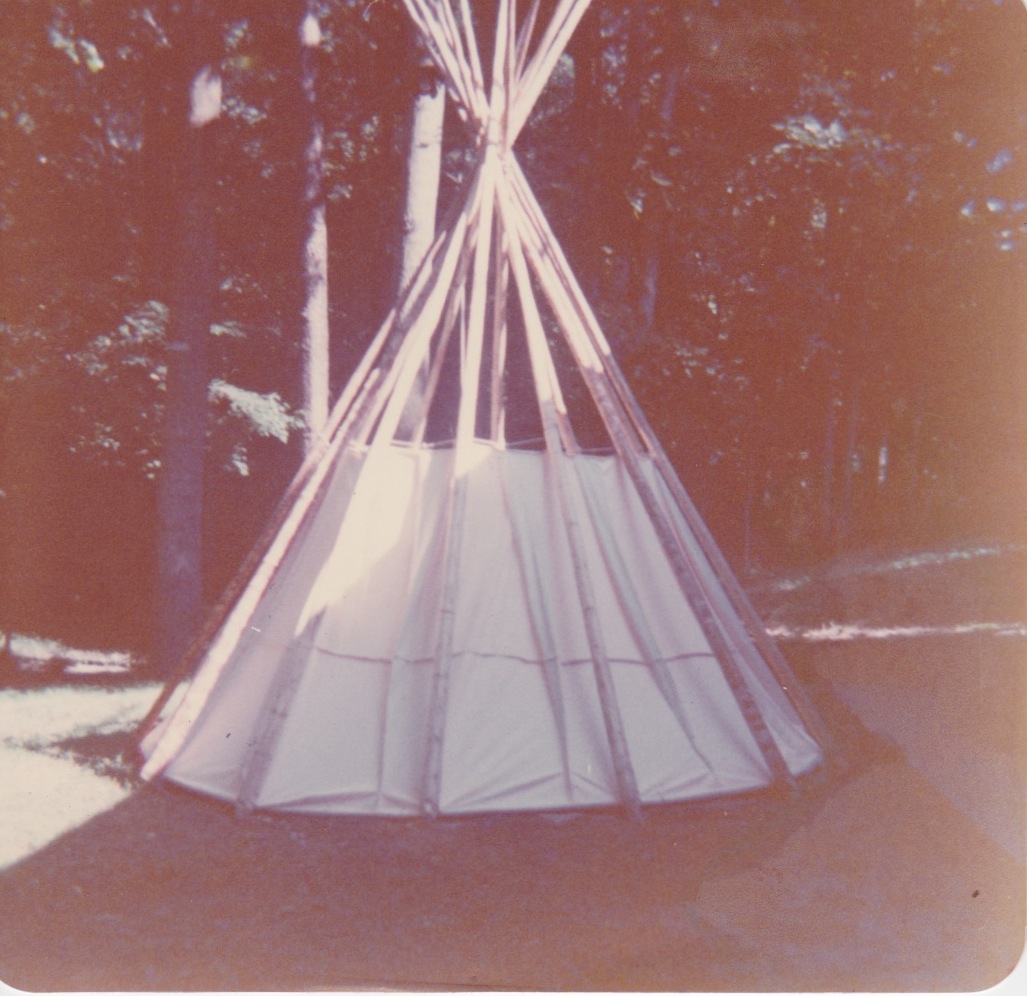
Athens, Georgia circa 1975.

Above is a photo of our father in front of his tipi in Athens, shirtless (as he was in all of his photos from the 70s it seems).
There has always been this mythology shrouding our Dad's years as a rangy youngster at University of Georgia in Athens. The tangential tales from those years--epic and quirky and boozy--seem to be malleable, half-truths that take various shapes over time.
But the factual core remains: our Dad, David, sported Sears denim overalls, bare-chested, and Chuck Taylors. He had permed hair with an almost-mustache and drank PBR beer at Tom Waits shows. And instead of living in one of Athens' antebellum houses--as many students did--he lived in his hand-built Tipi on farmland in the margins of Athens.
We decided to get the story straight and find some documentation of his tipi days...

We often mentioned our dad's tipi days and cracked jokes to elicit chuckles from our friends. I think we had a vague idea of the individuality and innate coolness in our Dad's endeavor, though it hasn't been until recently that we've become fascinated by this period in his youth and are begging him to recount details.
The (real) story begins with the book The Indian Tipi by Reginald and Gladys Laubin that David received as a gift. He became enamored with the old-world engineering and simple living. Perhaps there was a boyhood, cowboy-and-indian fantasy element as well.
With the book in hand, he drove his chevy pick-up from Athens, Georgia to Alberta, Canada to cut timber to build his tipi. On his return trip across the country, he serendipitously encountered the tipi book's authors, Reginald and Gladys Laubin, in Moose, Wyoming. The Laubins invited him into their home (a tipi) and gave him more tips on constructing a historically accurate Native American dwelling.
He found a plot of land in Athens by a farm pond for $10 a month and built his new home.

Labels:
design,
old photos,
tipi
Tuesday, June 1
REST IN PEACE, DEAREST LOUISE
Louise Bourgeois. 1911-2010.


"Art is a guarantee of sanity. That is the most important thing I have said."
Louise Bourgeois
Revisit the poems from her engravings "He Disappeared Into Complete Silence".
They're small and strong and just lovely.
Labels:
artist,
Louise Bourgeois
Subscribe to:
Posts (Atom)